
Fiscal stability exists, but it is not translating into meaningful economic development.
A fiscal structure heavily dependent on VAT reinforces a consumption-led economy rather than supporting production.
Current policies are not creating sufficient incentives for industry and exports.
The fiscal approach remains largely neutral and lacks strategic direction.
Without a change in course, the economy risks remaining dependent on imports and remittances.
Introduction
In developing economies, the fiscal system is not merely a technical mechanism for collecting budget revenues. It is also a strategic instrument for promoting economic growth and structural transformation.
In Kosovo, this issue is particularly important because of the structure of the economy, which is characterised by a high dependence on imports and remittances, together with a limited productive base. The role of fiscal policy should be assessed not only in terms of maintaining stability, but also in terms of its capacity to support long-term development
Why Does the Fiscal System Matter for Development?
Fiscal policy directly influences economic development through the mobilisation of public revenues and the allocation of public expenditure.
A well-functioning fiscal system can create favourable conditions for investment, support employment, and improve the competitiveness of the economy. A passive fiscal system, by contrast, limits development potential and leaves the economy dependent on external sources such as remittances and imports.
Kosovo’s Fiscal Structure: An Advantage or a Constraint?
Kosovo has established a relatively simple and regionally competitive fiscal system, characterised by comparatively low tax rates
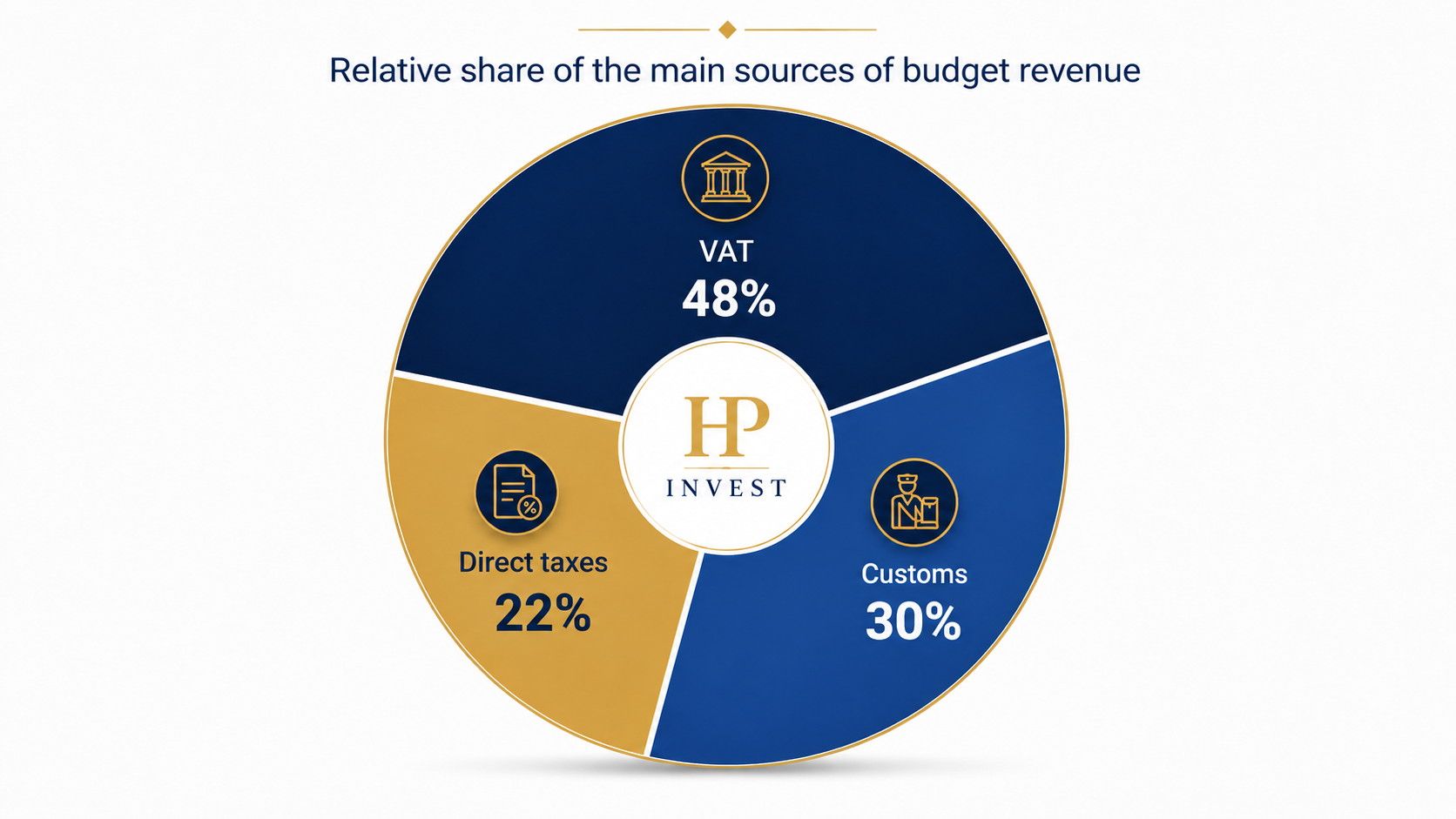
However, the largest share of budget revenues comes from indirect taxes, particularly value-added tax. This structure makes the system relatively efficient from an administrative perspective, but it also limits its developmental role because it does not directly target investment, production, and productive capacity.
Is Fiscal Policy Being Used to Support Development?
In practice, fiscal policy in Kosovo has primarily focused on maintaining macroeconomic stability.
This approach has helped preserve a manageable budget deficit and relatively low public debt. It has not, however, ensured the structural transformation of the economy.
The absence of targeted fiscal policies for strategic sectors such as manufacturing, technology, and export-oriented activities points to an approach that remains more neutral than developmental.
The Central Problem: A Consumption-Led Economy
One of the defining characteristics of Kosovo’s economy is its strong orientation towards consumption.
Economic growth is supported largely by remittances and domestic consumption, while the contribution of production and exports remains limited. The current fiscal system has not created sufficient incentives for domestic production, contributing to a persistent trade deficit and continued dependence on imports.
What Is Missing?
The principal weakness of the fiscal system is the limited availability of targeted fiscal incentives for productive and export-oriented sectors.
Policies designed to encourage innovation, investment in technology, and greater competitiveness remain underdeveloped. This restricts the economy’s ability to move from a consumption-led model towards one based on production and exports.
What Needs to Change?
Kosovo needs to move from a largely neutral fiscal approach towards a more active and strategically directed model.
This requires fiscal policies that support sectors with strong development potential, increased public investment in infrastructure and education, and an improved revenue structure that reduces excessive dependence on indirect taxation.
A more strategic fiscal framework should link tax policy, public expenditure, investment priorities, and sector development within a coherent model of economic transformation.
Conclusion
Kosovo’s fiscal system has played an important role in maintaining economic stability, but it has not been used sufficiently as an instrument for economic development.
Without a strategic shift in fiscal policy, the economy risks remaining dependent on consumption, imports, and remittances. Such dependence will continue to limit the country’s potential for sustainable growth, productive transformation, and international competitiveness.
For detailed information on the fiscal system, macroeconomic indicators, and development strategies, visit the Partner Zone.